
Buyer's Desk
1.5T vs 3T Refurbished MRI: Which Field Strength Is Right for Your Facility?
April 8, 2026 · 7 min · Medical Imaging Specialists
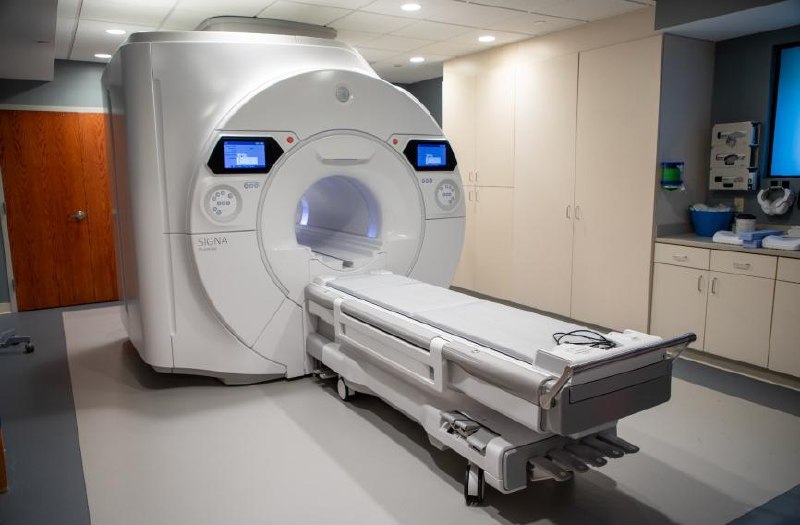
Practical considerations, risk points, and what to ask before you buy, service, move, or maintain imaging equipment.
Meta Title: 1.5T vs 3T Refurbished MRI: Which Field Strength Is Right for You? | Medical Imaging Specialists
Meta Description: Not sure whether to buy a refurbished 1.5T or 3T MRI scanner? This guide breaks down the clinical differences, costs, siting requirements, and ROI considerations to help you make the right call.
When facilities start shopping for a refurbished MRI system, field strength is one of the first decisions they’ll face. Should you go with a 1.5 Tesla system — the dependable, workhorse standard — or step up to 3 Tesla for higher resolution and faster scan times?
It’s not as simple as “more Tesla equals better.” The right answer depends on your patient volume, clinical focus, budget, physical space, and long-term service strategy. This guide walks through everything you need to weigh before committing.
What Field Strength Actually Means in Clinical Practice
MRI field strength, measured in Tesla (T), refers to the strength of the magnetic field the scanner generates. A stronger field produces a higher signal-to-noise ratio (SNR), which generally means sharper images and faster acquisitions.
1.5T systems have been the clinical backbone of MRI for over three decades. They handle the vast majority of routine imaging with reliable image quality — brain, spine, MSK, abdomen, pelvis, cardiac, and vascular studies. Most radiologists trained on 1.5T and are highly proficient reading those studies.
3T systems double the field strength, delivering significantly higher SNR. That translates to better resolution for detailed neurological work, functional MRI (fMRI), spectroscopy, and small-structure studies like the inner ear, pituitary, or wrist. In high-volume academic centers and specialty practices, 3T has become the standard.
The difference matters — but only if you actually need what 3T provides.
Clinical Use Cases: Where Each Field Strength Wins
When 1.5T is the Right Call
For the majority of community hospitals, outpatient imaging centers, and multi-specialty clinics, a refurbished 1.5T MRI system is more than adequate. Specific scenarios where 1.5T makes clear sense:
- General outpatient imaging — brain, lumbar spine, shoulder, knee, hip
- Cardiac MRI — 1.5T is actually preferred by many cardiologists because it generates less RF heating and fewer susceptibility artifacts near cardiac devices
- Patients with implants or devices — many implants are only cleared for 1.5T; 3T is contraindicated for a broader range of devices
- Pediatric imaging — 1.5T is generally better tolerated and produces fewer artifacts from patient motion
- High-throughput practices — scan times at 1.5T are fast enough for most routine protocols; throughput rarely suffers at this field strength
When 3T Justifies the Investment
3T earns its place in facilities where diagnostic specificity is the differentiator:
- Neuroimaging and epilepsy centers — white matter lesion detection, cortical mapping, functional studies
- Academic and research institutions — spectroscopy, diffusion tensor imaging (DTI), perfusion imaging
- Musculoskeletal specialty practices — visualization of articular cartilage, small tendons, and ligament anatomy
- Body oncology programs — prostate MRI (especially multiparametric), rectal staging, liver lesion characterization
- Breast MRI — 3T improves sensitivity and lesion conspicuity
If your referral base isn’t sending advanced neuro or oncology cases, the incremental image quality of 3T won’t move the needle on clinical outcomes — but it will move the needle on your operating costs.
Cost Comparison: Refurbished 1.5T vs 3T
This is where the conversation shifts significantly. Refurbished pricing varies by manufacturer, model year, software version, and configuration, but here are realistic ranges for well-prepared, OEM-supported systems in 2026:
| System Type | Refurbished Price Range |
|---|---|
| Refurbished 1.5T MRI (mid-vintage) | $250,000 – $600,000 |
| Refurbished 3T MRI (mid-vintage) | $500,000 – $1,000,000+ |
That’s just the equipment. Factor in:
- Site preparation and shielding — 3T systems require more robust RF and magnetic shielding; expect $50,000–$150,000 more in site costs depending on your building
- Cryogen and quench pipe infrastructure — 3T systems consume liquid helium at higher rates and require larger quench vent systems
- Annual service contracts — 3T preventive maintenance and parts costs typically run 20–35% higher than comparable 1.5T agreements
- Coil inventory — 3T coils are not interchangeable with 1.5T; a full coil set for a 3T system is a significant additional investment
For a facility doing general outpatient imaging, paying a $300,000–$500,000 premium for 3T rarely pencils out unless the incremental billing revenue from advanced protocols justifies it.
Siting and Infrastructure Considerations
The physical demands of 3T are meaningfully greater:
Magnetic fringe field: A 3T system projects a larger 5 Gauss line than most 1.5T systems. This affects how much space you need to dedicate to the MRI suite and how close staff can work. Many sites require additional shielding to contain the fringe field within the MRI room.
RF shielding: Higher field strength requires more precise RF shielding to prevent interference artifacts. Retrofitting an older MRI suite for 3T can be expensive if the original shielding wasn’t built for it.
Structural support: Some 3T systems are heavier. Floor loading specs need to be verified — especially in older buildings.
Quench vent systems: A superconducting 3T magnet holds more cryogen. The quench pipe (emergency helium vent) must be properly sized and routed. This is a building modification that involves mechanical contractors, local codes, and sometimes structural engineering review.
For a greenfield build, budget everything in from the start. For a retrofit, get a site survey from a qualified MRI planner before you commit to a 3T purchase.
Refurbished Market: What’s Available?
The refurbished 1.5T market is mature and inventory-rich. Widely available refurbished 1.5T platforms include:
- GE Signa HDxt, Explorer, Architect — reliable, wide software support, large installed base
- Siemens Avanto, Aera, Sola — excellent image quality, strong coil ecosystems
- Philips Ingenia, Achieva — dStream digital architecture offers impressive SNR on refurbished units
Refurbished 3T inventory is tighter but growing as systems originally installed in the early-to-mid 2010s come off their first service cycles:
- GE Signa PET/MR, MR750 — premium neuro and research platforms
- Siemens Skyra, Prisma — strong in academic and high-end clinical settings
- Philips Ingenia 3.0T CX — solid option for advanced body and neuro imaging
When evaluating refurbished 3T systems in particular, ask specifically about magnet history, cold head condition, and whether the system has been continuously cold or experienced a quench during its life. A system that quenched without professional recovery may have magnet integrity issues that affect long-term performance.
The Bottom Line: How to Choose
Ask yourself these four questions:
- What are your referring physicians actually ordering? If 90% of your volume is routine spine, brain, and orthopedic studies, a 1.5T will serve that caseload completely.
- Do you have a strategy for advanced protocols? Neuro specialty, prostate MRI, fMRI, or research programs are cases where 3T earns its premium.
- What’s your capital budget and infrastructure reality? If your building can’t easily support 3T siting requirements, 1.5T eliminates a six-figure variable from your project.
- What does your service strategy look like? If independent service is part of your cost control plan, 1.5T has a much deeper parts-and-engineer ecosystem.
For most community and outpatient facilities, a refurbished 1.5T MRI is the financially sound choice. For specialty-driven, high-complexity programs, 3T is the right investment — and the refurbished market now offers legitimate options at meaningful savings over new.
Talk to Medical Imaging Specialists
At Medical Imaging Specialists, we’ve been helping facilities across the US, Caribbean, and Latin America source, refurbish, and install MRI systems since 2004. We carry both 1.5T and 3T inventory and can walk you through the full picture — equipment costs, site requirements, service contracts, and what to watch for on a specific system.
If you’re evaluating a refurbished MRI purchase, reach out to our team before you sign anything. We’ll help you match the right system to your clinical program and your budget.
📞 Contact Medical Imaging Specialists: mis-team.com | Bradenton, Florida
Related Reading
Talk Through Your Next Imaging Project
If you are evaluating refurbished imaging equipment, planning a service strategy, or trying to keep an aging scanner productive, Medical Imaging Specialists can help. Contact MIS through the website and tell us what system you are working with.
Need help with this exact problem?
Send the modality, site location, timeline, and any system details. MIS will route the request by intent.
Related resources
Buyer's Desk
What Affects Used Medical Imaging Equipment Resale Value?
Used imaging equipment resale value depends on model, condition, records, accessories, demand, supportability, and removal complexity.
Buyer's Desk
What Questions Should You Ask Before Buying a Used MRI?
Before buying a used MRI, ask these equipment, service, site, logistics, parts, and quote questions to avoid expensive surprises.
Buyer's Desk
What to Look for When Buying a Used CT Scanner
Buying a used CT scanner? Check tube life, service history, parts support, site fit, software, installation scope, and post-sale service.