
Buyer's Desk
Refurbished Medical Imaging Equipment: Total Cost of Ownership Guide
March 31, 2026 · 6 min · Medical Imaging Specialists
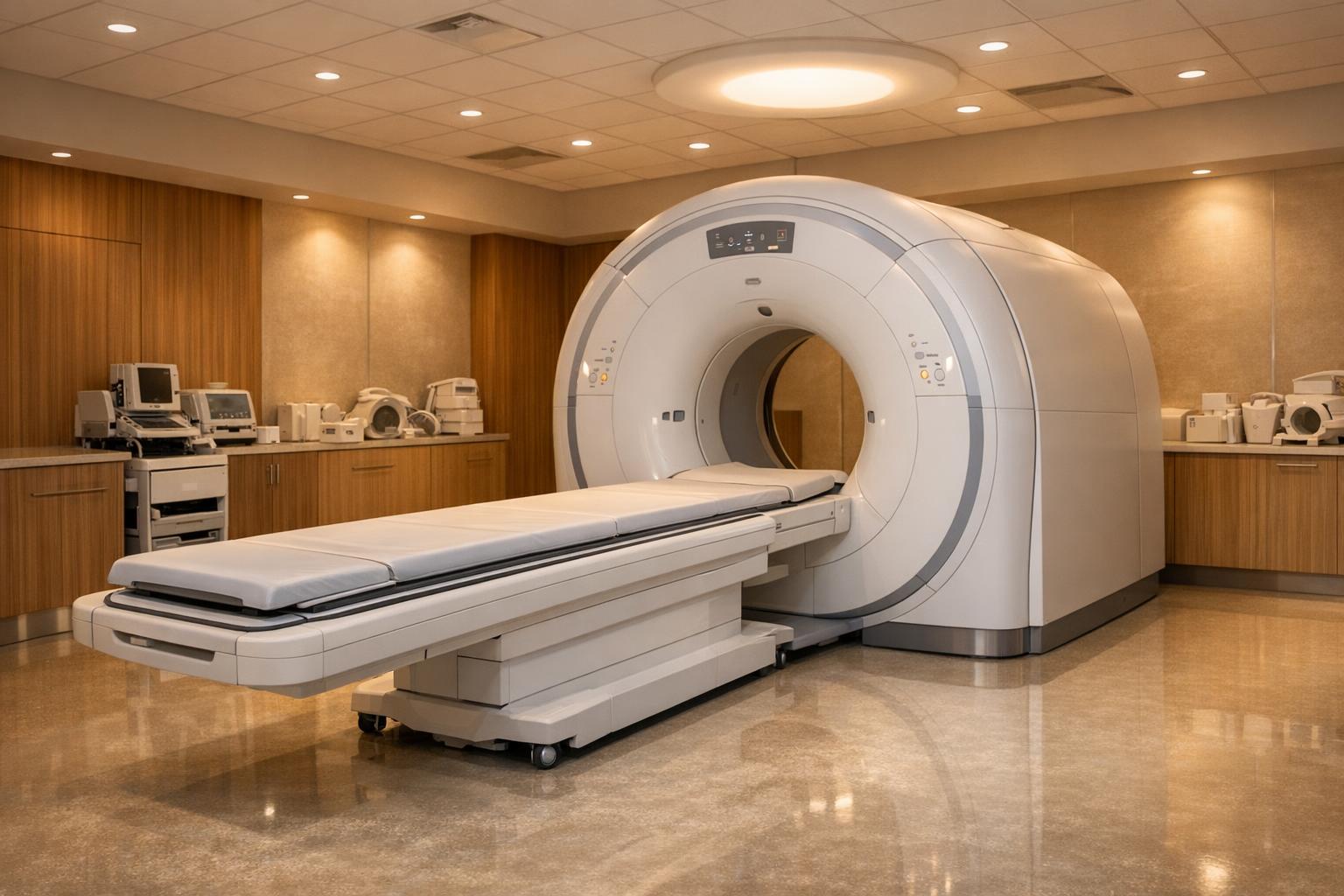
Practical considerations, risk points, and what to ask before you buy, service, move, or maintain imaging equipment.
Considering a lease instead?
Equipment, service, PMs, parts, and applications support can be bundled into one monthly payment.
If this article is about financing, ROI, service contracts, or total cost of ownership, the leasing model may simplify the decision.
Target Keyword Phrase: refurbished medical imaging equipment total cost of ownership
Buying a refurbished CT scanner, MRI, or PET/CT system can save your facility hundreds of thousands of dollars compared to purchasing new. But the sticker price is just the beginning. For healthcare administrators, imaging center owners, and hospital CFOs, understanding the total cost of ownership (TCO) of refurbished medical imaging equipment is the difference between a great investment and a costly surprise.
This guide breaks down every major cost factor so you can evaluate refurbished imaging systems with clear eyes — and make a decision that holds up for years.
Why “Purchase Price” Is Only Part of the Story
It’s tempting to frame the decision around a single number: what does the machine cost? But experienced buyers know that the upfront price represents only 40–60% of what you’ll actually spend over the system’s useful life.
A refurbished 64-slice CT scanner priced at $250,000 may ultimately cost more or less than a competing unit at $300,000, depending on installation requirements, service contract terms, parts availability, and how many revenue-generating scans it can reliably produce each year.
To compare two systems accurately, you need to model the full picture.
Major Components of Total Cost of Ownership
1. Acquisition Cost
This is the purchase price of the equipment itself — the number you negotiate with the vendor. For refurbished imaging systems, this typically includes:
- The scanner hardware
- Refurbishment and testing documentation
- A baseline warranty (varies by vendor; 90 days to 1 year is common)
- Application software licenses (verify these are included and transferable)
What to watch: Some vendors quote a low acquisition price but exclude software licenses, coil sets (for MRI), or injectors (for CT/PET). Always ask for an itemized quote.
2. Installation and Site Preparation
This is one of the most underestimated costs in refurbished equipment purchases, and it can range from $30,000 to well over $200,000 depending on system type and facility condition.
CT scanners typically require:
- Radiation shielding (lead-lined walls, doors, ceiling/floor if applicable)
- HVAC upgrades for heat load management
- Electrical service upgrades (most CT systems require 480V 3-phase)
- Equipment pad and conduit work
MRI systems require all of the above plus:
- RF shielding (Faraday cage)
- Cryogen supply and quench pipe infrastructure
- Fringe field mapping and zone planning
- Magnet ramp-up and shimming
PET/CT systems combine CT site requirements with additional radiation safety measures and, in some cases, cyclotron proximity planning.
Pro tip: Get a site survey done before you commit to a system. A reputable vendor should offer this as part of the pre-sale process. Surprises in the equipment room are always expensive.
3. De-Installation, Rigging, Crating, and Shipping
If the system is being relocated from another facility — which is almost always the case with refurbished equipment — someone has to disconnect, deinstall, properly pack, and ship a multi-ton piece of capital equipment.
Costs vary based on:
- Distance and destination (domestic vs. international, including LATAM and Caribbean)
- System type and weight (a 3T MRI magnet requires specialized transport)
- Whether cryogens need to be managed during transit
- Port fees, customs, and import duties for international shipments
Budget $15,000–$50,000+ for domestic rigging and transport; international shipments can add significantly more depending on destination. Work with vendors who have documented experience in international logistics — one failed customs clearance can delay your project by months.
4. Service and Maintenance Costs
This is the biggest ongoing cost variable, and it’s where many buyers get caught off guard.
Options typically include:
- Full-service contract: Parts, labor, and PMs all covered. Predictable cost, typically $40,000–$120,000/year depending on system type and coverage tier.
- Time and Materials (T&M): Pay per service call. Lower upfront commitment, but high variance — one bad year can cost as much as a full-service contract.
- PM-only contract: Covers scheduled preventive maintenance only. Keeps the system in compliance but leaves repair costs as variable.
For refurbished systems specifically: Parts availability matters enormously. Older platforms (10+ years) may have limited OEM support. A vendor with in-house parts inventory and field engineers is far more valuable at year 3–5 than one who resells the box and moves on.
Ask your vendor: Do you stock parts for this platform? Do you have in-house engineers or do you subcontract service? The answers will tell you a lot about your long-term service costs.
5. Software and Upgrade Costs
Imaging software evolves quickly. Depending on when the system was manufactured, the software may be several generations behind current standards.
Questions to ask:
- Is the current software version included in the sale?
- Are future software updates available, and at what cost?
- Are third-party AI reconstruction or reading tools compatible with the platform?
- Is PACS/RIS integration included or additional?
Some software upgrades can run $20,000–$80,000. Know what you’re getting before you sign.
6. Revenue Potential and Scan Volume
The most important number on the other side of the ledger. A refurbished imaging system that produces 15–25 scans per day at $400–$600 per scan (net of payer mix) generates $2.2M–$5.5M annually. Even modest utilization makes the equipment investment look small.
Model your breakeven:
- What is your expected scan volume at launch?
- What’s your average reimbursement per exam type?
- How many days per year will the system be operational?
- What is your target margin per scan?
A well-maintained, properly installed refurbished system can reach parity with new equipment on revenue — often at 40–60% of the initial cost. The TCO advantage compounds quickly when service and parts costs are well-managed.
7. End-of-Life and Resale Value
Refurbished systems don’t last forever, but well-maintained equipment retains more value than most buyers expect. A 16- or 32-slice CT scanner that has been properly serviced and kept up to compliance can be resold or traded in after 5–7 years of operation.
This residual value should factor into your TCO model. A system with documented service history and a vendor who supports resale logistics is worth more at end-of-life than one that was purchased and left to run without structured maintenance.
Putting It All Together: A Simple TCO Framework
| Cost Category | Typical Range |
|---|---|
| Acquisition (refurbished CT) | $150,000 – $400,000 |
| Site prep & installation | $30,000 – $200,000+ |
| De-install, rigging & shipping | $15,000 – $50,000+ |
| Service contract (5 years) | $200,000 – $600,000 |
| Software & upgrades | $0 – $80,000 |
| Total 5-Year TCO | ~$400,000 – $1.3M |
Compare this against a new system at $1.5M–$2.5M purchase price, plus similar service and installation costs. The refurbished advantage is real — but only when you buy smart.
Work With a Vendor Who Understands the Full Picture
The right refurbished imaging vendor isn’t just selling you a machine — they’re a partner in the entire lifecycle. That means pre-sale site assessments, transparent pricing, reliable de-installation and installation logistics, in-house parts inventory, and post-sale service support.
Medical Imaging Specialists (MIS), based in Bradenton, Florida, has been helping imaging centers, hospitals, and clinics across the U.S., Caribbean, and Latin America make sound refurbished equipment investments since 2004. We sell, install, and service CT, PET/CT, and MRI systems — and we keep our own parts inventory so your service calls don’t wait on a supply chain.
If you’re modeling a refurbished equipment purchase and want a straight answer on what it will actually cost to own, contact the MIS team for a no-pressure conversation.
Medical Imaging Specialists — Family-owned, Florida-based, serving the imaging industry since 2004.
Related Reading
- Read next: How To Calculate Roi Refurbished Ct Mri Scanner
- Read next: Financing Refurbished Medical Imaging Equipment
Need help with this exact problem?
Send the modality, site location, timeline, and any system details. MIS will route the request by intent.
Related resources
Buyer's Desk
What Affects Used Medical Imaging Equipment Resale Value?
Used imaging equipment resale value depends on model, condition, records, accessories, demand, supportability, and removal complexity.
Buyer's Desk
What Questions Should You Ask Before Buying a Used MRI?
Before buying a used MRI, ask these equipment, service, site, logistics, parts, and quote questions to avoid expensive surprises.
Buyer's Desk
What to Look for When Buying a Used CT Scanner
Buying a used CT scanner? Check tube life, service history, parts support, site fit, software, installation scope, and post-sale service.