
Buyer's Desk
How Much Does a Mobile CT Lease Cost in 2026?
May 3, 2026 · 6 min · Medical Imaging Specialists
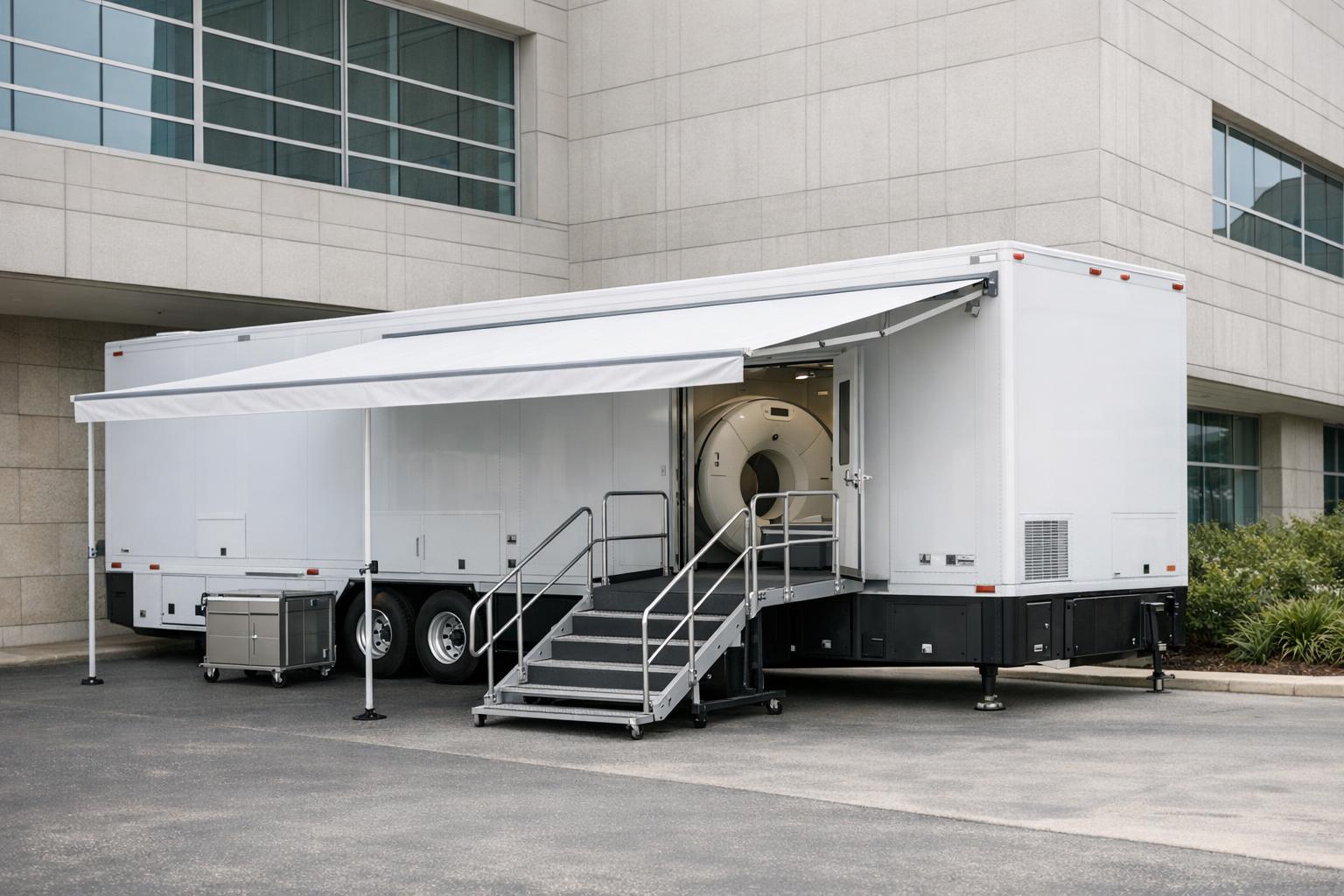
Practical considerations, risk points, and what to ask before you buy, service, move, or maintain imaging equipment.
Considering a lease instead?
Equipment, service, PMs, parts, and applications support can be bundled into one monthly payment.
If this article is about financing, ROI, service contracts, or total cost of ownership, the leasing model may simplify the decision.
A mobile CT lease cost is never just the trailer. The real price depends on the scanner inside it, how long you need it, what your site already has in place, who handles service, and whether you are leasing equipment or buying a complete scanning operation.
That matters because mobile CT is usually purchased under pressure. A fixed CT is down. A room is under renovation. Emergency department volume has outgrown the installed scanner.
In those situations, the cheapest monthly number is not always the lowest-risk option. The right quote should protect uptime, workflow, image quality, and patient access from day one.
What drives mobile CT lease cost?
The biggest cost driver is the CT platform itself. A mobile unit with a basic 16-slice CT is a different asset than one carrying a 64-slice or higher-end scanner with cardiac capability, metal artifact reduction, advanced dose tools, or newer reconstruction software.
Common mobile CT platforms in the refurbished and leased market include GE LightSpeed and Optima CT families, Siemens SOMATOM Emotion/Definition/Definition AS platforms, Philips Brilliance and Ingenuity systems, and Toshiba/Canon Aquilion models. Availability changes constantly because not every CT is a good candidate for mobile deployment. The scanner has to fit the trailer environment, service access has to make sense, and the configuration has to match the clinical work.
Slice count affects the quote, but it should not be the only spec you compare. A 64-slice CT with worn tube life, weak service coverage, or limited software can become more expensive than a lower-slice system that fits the clinical need and stays up.
Lease term also matters. A short bridge rental for a failed scanner is priced differently than a planned six-month renovation support project or a multi-year mobile imaging program. Short terms carry more mobilization pressure. Longer terms give the provider more room to structure service, logistics, and asset utilization.
If you are also evaluating fixed-site CT equipment, compare the mobile quote against your broader CT strategy. Our refurbished CT scanner cost guide breaks down how scanner class and project scope affect fixed-site buying decisions.
Dry lease vs turnkey mobile CT service
Before comparing numbers, make sure every vendor is quoting the same thing.
A dry lease usually means you are leasing the mobile CT asset: trailer, CT scanner, patient table, power interface, HVAC, shielding, and related equipment. Your facility handles technologists, scheduling, protocols, contrast workflow, radiologist coverage, billing, patient intake, supplies, and daily operations.
A turnkey mobile CT program includes more operational support. Depending on the provider, that may include technologists, applications support, route planning, startup coordination, preventive maintenance, uptime response, and a more complete clinical operating package. It costs more because the vendor is not just providing hardware — they are helping deliver CT capacity.
Those are not interchangeable quotes. A dry lease may be the right fit for a hospital with CT techs, established protocols, PACS/RIS support, and an imaging manager who only needs temporary capacity. A turnkey program may make more sense for a rural hospital, specialty clinic, construction bridge, or new outpatient operator.
Ask this early: who owns the problem when the first patient is scheduled? If the answer is unclear, the quote is not complete.
Site readiness is where mobile CT budgets get surprised
Mobile CT is faster than building a new CT room, but it is not plug-and-play. The trailer still needs a safe, compliant, operational site.
Most projects need to review:
- Trailer parking location, pad condition, slope, drainage, and load support
- Truck access, turning radius, delivery route, and overhead clearance
- Shore power, often high-voltage three-phase service depending on the trailer
- Receptacle type, cable path, grounding, and distance to electrical service
- Radiation shielding assumptions and local regulatory requirements
- HVAC performance and environmental conditions around the trailer
- Patient access, ADA path, ramp or lift workflow, lighting, and security
- Staff movement between the building and mobile unit
- Contrast storage, crash cart access, oxygen policy, and emergency workflow
- Network, PACS, RIS, DICOM, modality worklist, VPN, and phone connectivity
The lease quote may not include electrical work, concrete, trenching, IT drops, canopy coverage, signage, state inspections, or temporary workflow changes. Those items can be minor at one facility and a real project at another.
This is why a pre-lease site walk matters. A vendor that asks detailed site questions before quoting may feel slower at the beginning, but that discipline usually prevents expensive surprises later. If your mobile CT is supporting a renovation or replacement project, read our CT scanner site preparation guide before locking the schedule.
Service coverage can be the difference between capacity and downtime
Mobile CT leasing is often used to protect revenue and patient access. That only works if the system stays available.
A quote should clearly explain preventive maintenance, tube coverage, parts responsibility, response time, remote diagnostics, applications support, and what happens if the scanner has a major failure. CT tubes, detector electronics, high-voltage components, couch/table assemblies, computers, HVAC, and trailer infrastructure all matter. The scanner can be clinically ready and the trailer can still be down because power, cooling, lift, or network systems are not right.
Do not assume service is included just because the asset is leased. Some agreements include planned maintenance and corrective service. Others separate tube coverage, travel, parts, after-hours response, or trailer repairs.
For operator-grade buying, ask for the escalation path. Who answers the phone? Who dispatches the engineer? Are parts stocked or sourced after failure? Is the service team familiar with the exact CT model in the trailer? Is there a backup plan if the unit is down for more than a day?
MIS is built around that practical reality: equipment, parts, engineers, refurbishment, installation, and service all have to work together. Leasing without service discipline is just a prettier way to rent downtime.
What should be included in a mobile CT lease quote?
A strong mobile CT lease quote should give you enough detail to compare operational risk, not just monthly cost. At minimum, ask vendors to define:
- CT manufacturer, model, slice count, software level, and major clinical options
- Tube status, service history, and whether tube coverage is included
- Trailer age, condition, HVAC, shielding, lift/ramp, and layout
- Lease term, mobilization cost, demobilization cost, and extension options
- Delivery, installation, calibration, acceptance testing, and applications support
- Preventive maintenance schedule and corrective service coverage
- Parts responsibility, travel terms, after-hours support, and response expectations
- Site responsibilities, including power, pad, network, permits, and inspections
- Staffing model: dry lease, tech-included, or broader turnkey operation
- Insurance, regulatory responsibilities, cancellation terms, and uptime remedies
The goal is to make sure two quotes are actually comparable. If one proposal includes tube coverage, site planning, and startup support while another only lists a monthly trailer charge, those are not the same offer.
This is the same thinking behind any major refurbished imaging purchase: define the clinical requirement first, then evaluate the asset, vendor, service plan, and total operating risk. Our guide on questions to ask before buying refurbished imaging equipment applies directly to mobile leasing too.
When does mobile CT leasing make the most sense?
Mobile CT makes sense when speed, flexibility, or temporary capacity is more valuable than owning a fixed room immediately.
Common use cases include:
- Replacing CT capacity during construction or room renovation
- Keeping service live while a fixed scanner is being replaced
- Covering a long repair event or end-of-life transition
- Adding overflow capacity for emergency, outpatient, or oncology volume
- Testing a new market before committing to a permanent CT suite
- Supporting rural, regional, or multi-site imaging routes
- Bridging capital-budget timing when patient demand already exists
It is usually weaker when the facility has no clear volume, no site plan, no staffing plan, and no defined clinical use case. Mobile CT is flexible, but flexibility is not a substitute for operational planning.
If the need is temporary, lease structure and uptime terms matter most. If the need is long-term, compare mobile leasing against fixed-site refurbished CT, financing, and asset-management leasing.
Bottom line: price the capacity, not just the trailer
The best way to evaluate mobile CT lease cost is to ask what you are really buying: a scanner in a trailer, or dependable CT capacity for a defined clinical need.
A good lease protects the schedule, the patient workflow, the image quality, and the service plan. A weak lease only looks good until the first downtime event, failed inspection, power issue, or staffing gap.
If your facility is planning temporary CT capacity, renovation coverage, or a mobile imaging route, start with the clinical requirement and site reality. Then build the lease around uptime.
MIS supports refurbished equipment, service, parts, installation, and mobile asset-management leasing under one roof. To talk through a mobile CT or broader mobile imaging plan, start here: mobile imaging leasing or request a project quote at /quote.
Need help with this exact problem?
Send the modality, site location, timeline, and any system details. MIS will route the request by intent.
Related resources
Ops Playbook
PET/CT Scanner Site Requirements Before You Buy
Before buying a PET/CT scanner, review room layout, shielding, power, HVAC, rigging, workflow, connectivity, service access, and replacement timing.
Ops Playbook
X-Ray Equipment Lifespan, Maintenance, and Cost Factors
X-ray equipment lifespan depends on tube, detector, generator, software, PM history, parts access, uptime needs, and replacement timing.
Buyer's Desk
What Affects Used Medical Imaging Equipment Resale Value?
Used imaging equipment resale value depends on model, condition, records, accessories, demand, supportability, and removal complexity.