
From the Field
MRI Magnet Removal Without Wall Demolition: What Careful Planning Actually Looks Like
April 8, 2026 · 4 min · Medical Imaging Specialists
Practical considerations, risk points, and what to ask before you buy, service, move, or maintain imaging equipment.
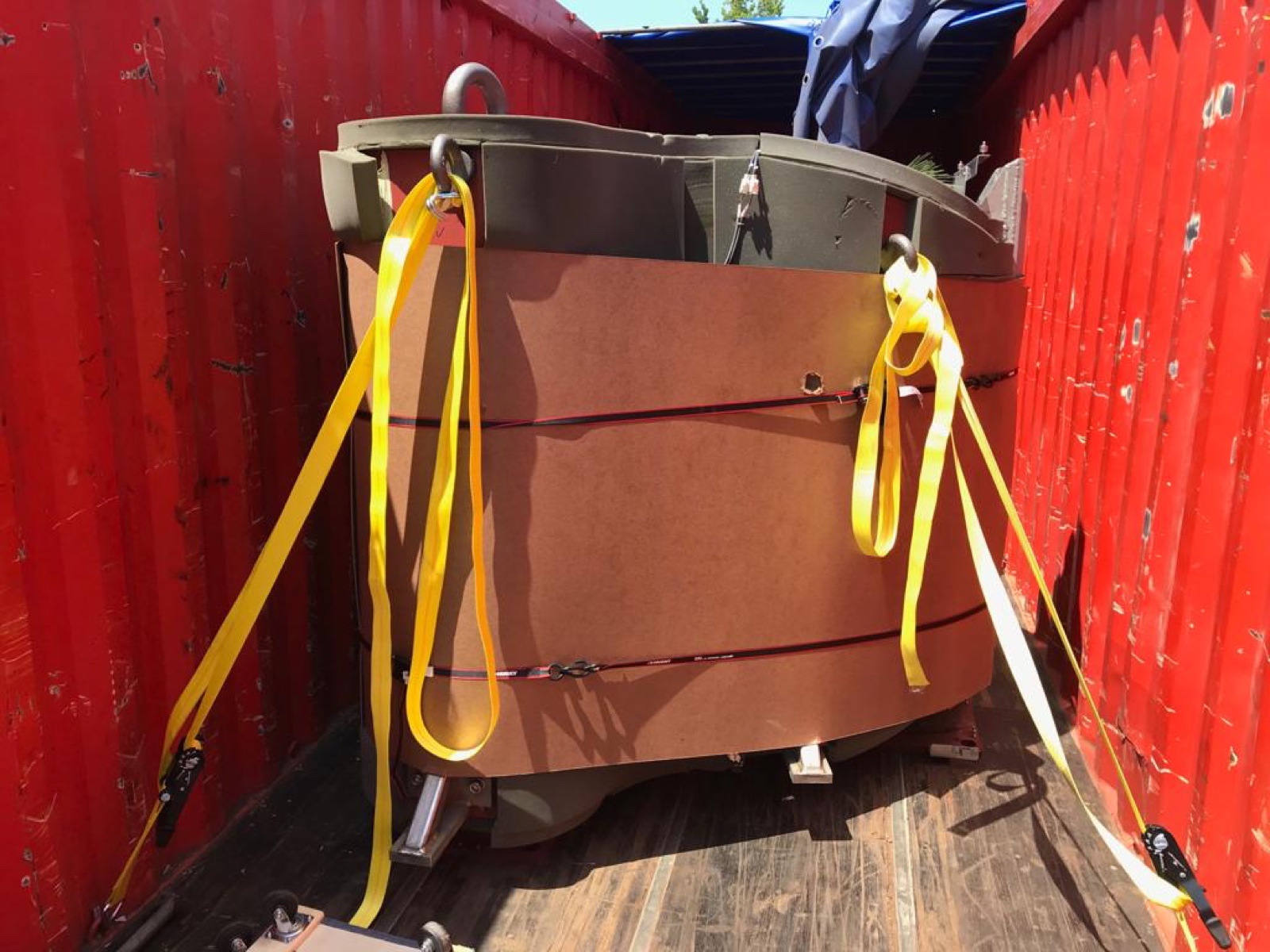
Pulled a 22-ton MRI magnet out of a hospital without taking down a wall. That is the kind of job that looks impossible until the planning is done correctly.
MRI deinstallation is not just heavy lifting. It is route planning, magnet safety, structural review, rigging math, facility coordination, and a dozen small decisions that determine whether the project stays controlled or turns into a demolition problem.
The Hard Part Starts Before the Magnet Moves
A successful MRI magnet removal starts with the building, not the machine. Before anyone talks about a forklift or a crane, the team needs to understand the route out: door openings, corridor turns, ceiling height, floor loading, elevator limitations, exterior access, and any areas where a few inches decide the whole job.
That is where experience matters. A magnet that clears one hallway by three inches is not a lucky break. It means someone measured the path, modeled the turn, checked the rigging envelope, and knew which covers, panels, or temporary barriers could be removed without creating new risk.
The goal is simple: move the magnet safely without turning a medical facility into a construction site.
Why Wall Demolition Is Usually a Planning Failure
Sometimes demolition is unavoidable. More often, it is the result of poor pre-planning or a team that only knows one way to move equipment.
MRI magnets are large, awkward, and heavy, but they are not mysterious. The constraints are knowable. Door widths can be measured. Floor loading can be verified. Pathways can be protected. Quench status, shielding, fringe field concerns, and site safety can be planned in advance.
When a vendor jumps too quickly to “we need to open the wall,” the facility should ask why. Is the route impossible, or has nobody done the work to prove it out?
What Facilities Should Ask Before an MRI Deinstall
If you are planning to remove, replace, or relocate an MRI system, ask for the practical details before the project starts:
- Has the vendor walked the full route in person?
- Has the magnet weight and rigging configuration been confirmed?
- Are floor loads, ramps, thresholds, and turns documented?
- Who is coordinating with facilities, security, clinical leadership, and the rigging crew?
- What building protection is included?
- What is the backup plan if the original route is blocked?
Those questions reveal whether you are dealing with an equipment partner or someone who is simply outsourcing the hard part.
The Value of a Full-Service Imaging Partner
A clean deinstallation protects more than walls. It protects clinical schedules, construction timelines, resale value, and internal confidence in the project.
Medical Imaging Specialists handles imaging equipment as a full lifecycle asset: buying, deinstalling, crating, shipping, refurbishing, installing, servicing, and supporting systems after the move. That matters because the team removing the magnet understands what happens next. The equipment still has to be protected, documented, transported, and potentially prepared for resale or reinstallation.
That broader view changes the standard of care.
Protecting the Equipment After It Leaves the Room
The job is not finished when the magnet clears the doorway. A removed MRI still has value, and that value depends on how it is handled after deinstallation. Documentation, component protection, crate planning, loading, and transport all affect whether the system can be refurbished, resold, harvested for parts, or reinstalled elsewhere.
That is why the deinstall crew should understand medical imaging equipment, not just heavy rigging. A general moving contractor may be able to move weight. An imaging partner knows which components need protection, what documentation the next buyer or service team will need, and how one bad handling decision can turn a usable asset into a parts unit.
Related Reading
Planning an MRI Removal or Replacement?
If you are replacing an MRI, relocating a system, or trying to understand whether a difficult removal can be done without major construction, Medical Imaging Specialists can help evaluate the project. Contact MIS through the website and tell us what system you are moving.
Need help with this exact problem?
Send the modality, site location, timeline, and any system details. MIS will route the request by intent.
Related resources
Ops Playbook
Why Preventive Maintenance Prevents Most Imaging Equipment Failures
Most emergency imaging service calls trace back to maintenance that slipped. A disciplined PM program protects uptime, image quality, and budgets.
Ops Playbook
CT and MRI Preventive Maintenance: What's Included and Why It Matters
Learn what preventive maintenance for CT and MRI scanners includes, how often it's needed, and why a solid PM program protects your investment and maximizes...
Buyer's Desk
How to Calculate ROI on a Refurbished CT or MRI Scanner
Learn how to calculate the return on investment for a refurbished CT or MRI scanner. Understand revenue potential, break-even timelines, and why refurbished...